
There had been a few improvement in the moanstery since my first visit in 1993. It all seemed a lot more colourful and yellow. And this forecourt was now paved.
Monday, February 28, 2005


Welcome to Muli

I'd like to say this was the crowd of monks who welcomed me to Muli as the first outsider to go there in years.In actual fact this was taken on my second visit in 1996 as we were leaving. It was set up by Keith Lyons who was so much better at photography than me.
Saturday, February 26, 2005
The road to Muli: Wachang
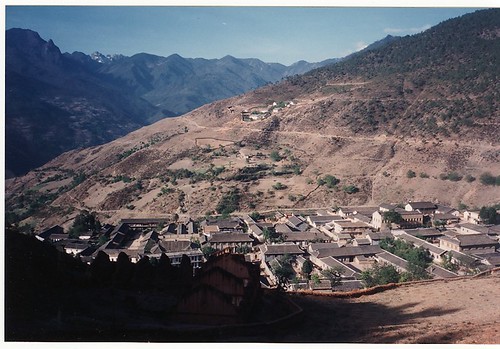
This is the nearest town to Muli monastery. It sits on a spur, up a side valley of the Litang river canyon. The mountain ridge in the background is the one you cross over when coming from Yongning. It is about 4200 metres.
Muli: Wachang [瓦厂] main street [only street]
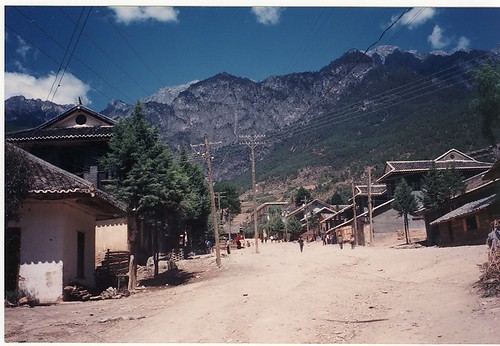
Wachang [瓦厂] is the administrative centre for the Muli monastery area. It consists of a single street with a few stores, a snack restaurant, a school and a guesthouse. That's it.
It is connected to the other towns in the Litang river valley by a rough road that winds several thousand feet down to the river below, and then corkscrews up the other side and follows a roller coaster switchback route down the the county town of "Muli" [actually known as Bowa] about 150km south. It's a wild and dangerous ride, and there are no buses.
The road to Muli: Wachang [瓦厂] at last!

After walking for three days from Yongning with little sign of any other towns, we eventually plodded down towards the bottom of the Litang river valley. Weary and hungry, we rounded a corner and there before us was a small white walled settlement on a spur above the valley - it was Wachang [瓦厂] - the only "town" in the upper part of the valley, and the base for exploring the Muli monastery. We had made it!
Muli hunter

On the way down from the Gibboh pass we came across this chap at the timber camp who offered to take us out on a hunting trip to kill a panda. I presume he meant the more common brown panda rather than one of the rare black pandas!

Here's an earlier Muli hunter, in cermonial dress, with the same gun.
Road to Muli: at the timber camp

On the way down from the Gibboh pass in 1996 we stopped off at a timber camp about half a day's walk up the valley from Wachang. It was just a rough brick building with a fire. The local Tibetan and Pumi guys welcoimed us and gave us a feed [as yoou can see here]. On the way back we stopped there for the night, sleeping on the table tennis table to avoid the concrete floor - very cold it was too.
Thursday, February 24, 2005
Having a break: above Muli.
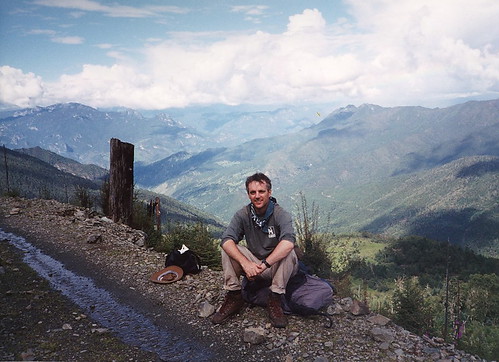
I set off from Wujiao at 8am and made it this far by the late afternoon. I was still about four hours walk down to Wachang (the main village near Muli monastery). There is a timber camp a bit further down where I was planning to camp for the night. but by chance a jeep came past [the only traffic of the day] and took us the last few km. We did, however, get stuck crossing while a river on the way. Which probably explains why there was no traffic on this "road"

Shortly afterwards we got stuck while fording a river on the way down to Muli. Had to shift a few boulders from uner the jeep.
Muli: Mt Mitzuga in cloud.
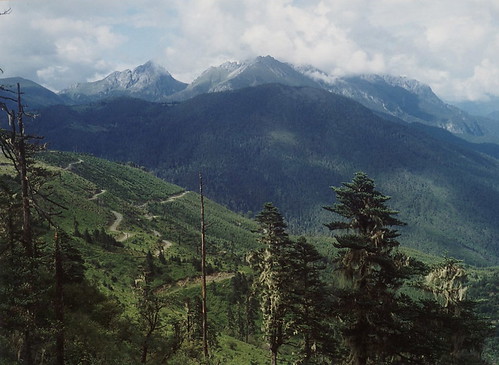
On the way down from the Gibboh pass you get great views of the 5500 m high Mt Mitzuga that towers over Muli. Everything looks very green at this time of year (August) because it's the rainy season.
"The trail led down a spur jutting out into a deep canyon in which flows the Muli river. To the left a high range, crowned by volcanic cones of perfect shape, testified to the mighty volcanic upheavals that once occurred here."
The road to Muli: looking down from the Gibboh Pass.
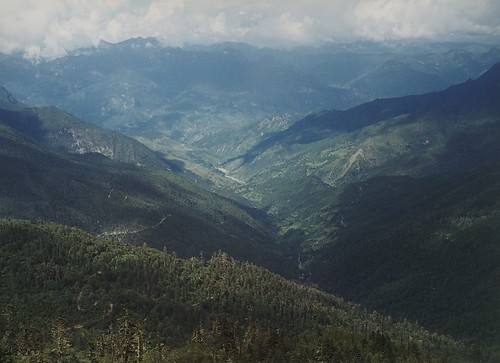
The road zigzags down from 4500m towards Wachang.
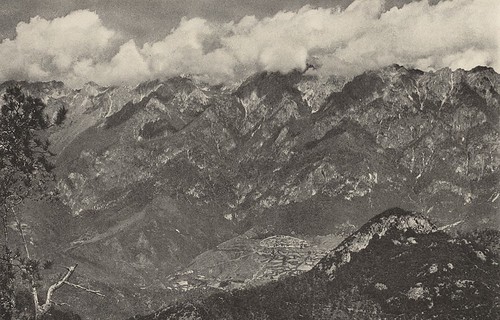
This is a picture that Joseph Rock took from the opposite direction, from the eastern bank of the Litang river valley, towards Muli. You can see the monastery complex circled by a wall.
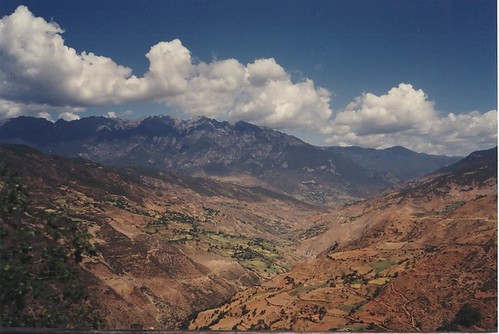
Here is some similar views taken from the back of a truck as I left Muli in 1994.
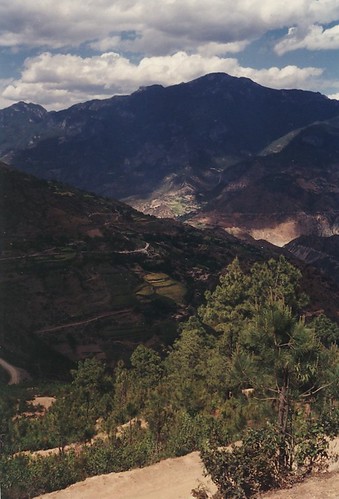
View of Muli valley from the Gibboh pass
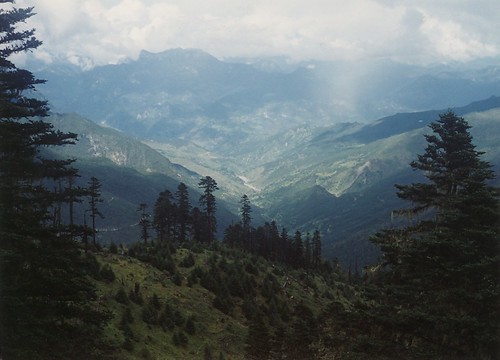
This is the view you get from the pass down towards Wachang and the Litang river.
"We descended through a steep forest of spruce and fir, with rhododendron trees as underbrush; lichens and mosses covered trunks and boulders. All was hushed.”
Made it! At the Gibboh Pass.
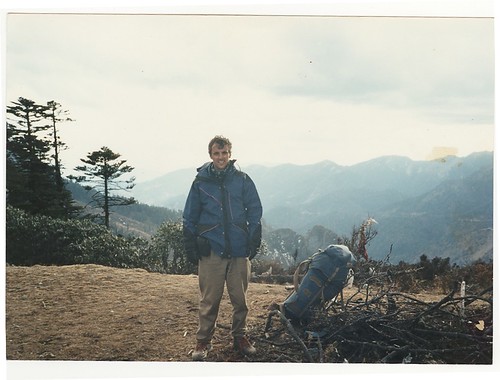
At the Gibboh pass I felt like my lungs were going to burst. It was 4500 metres high and the last hour was a killer. A nice spot once you got up there though.
Leeches
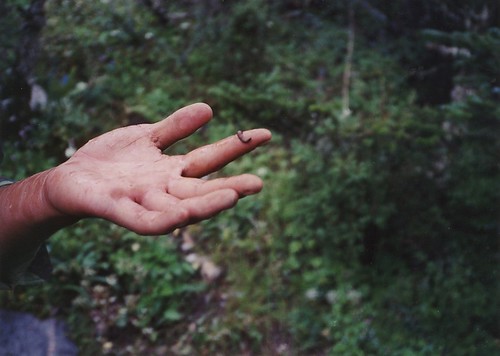
Leeches cling to the rocks and branches at the high altitudes and attach to your skin very easily. You can't feel them.
Leeches - a hazard on the way
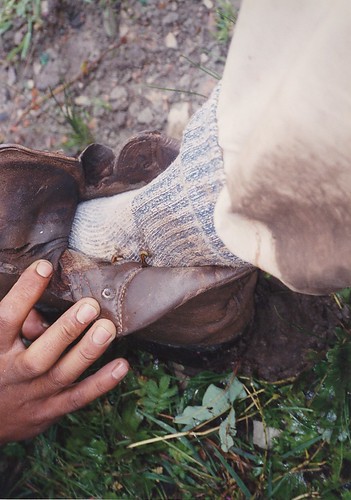
As we neared the pass at about 4000 meters in the rain I was told by my guide to check for those "blood sucking things". I thought he meant mosquitoes, until he told me to check my socks. This is what I found.
The road to Muli: over the Gibboh pass
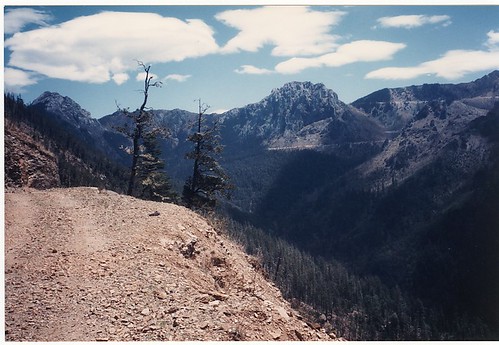
This is the jeep track that twists over the Gibboh pass from Wujiao to Muli. It goes the long way round, and it's actually quite a bit quicker to go on foot along the valley bottom to avoid all the switchbacks. But then you get a super big climb at the end of the day over that lump of rock you can see on the horizon.
On this picture if you look carefully you can see the road zig-zagging over the pass. My, that was a big walk. And somehow, on my first trek to Muli I managed to do it all in a day. I must have been fit in those days!

On the way up to the pass during my second trip - in the wet season - I was guided through the valley by a man from Wujiao. Here are some of the huts [unoccupied] that we paused at before ascending to the Gibboh Pass.

My guide and porter.
The road to Muli, Stage 3: Renjom Gompa
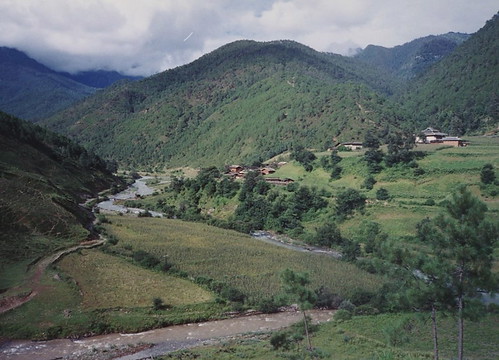
This is the tiny Buddhist monastery of Renjom Gompa, situated in a beautiful valley half way between Yongning and Muli. It is a day's trek over low hills to get here from Yongning, via the log cabin villages of Wulabi and Lijiasun.
Joseph Rock passed this way many times on his visits to Muli and mentions the monastery with its lonely monk in residence.
Spirit tree, Renjom Gompa
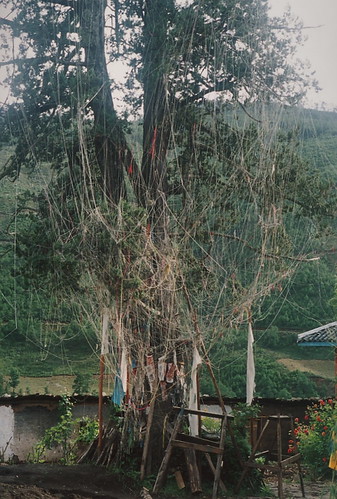
It has threads tangled up in its branches. A shrine to the weather gods.
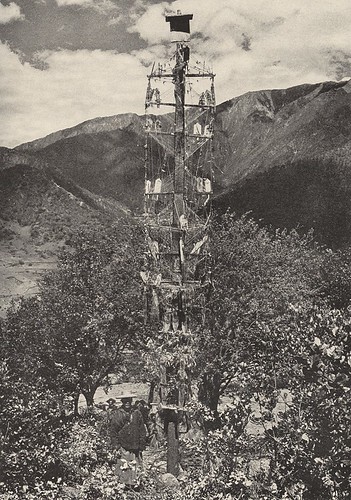
Joseph Rock saw something similar in 1926: "a scarecrow to ward off evil weather" he wrote. "The structure resemblling a primitive radio tower was erected by Hsifan sorcerers. These towers are built once in every three or four years and are believed to be especially effective as protection against hail."
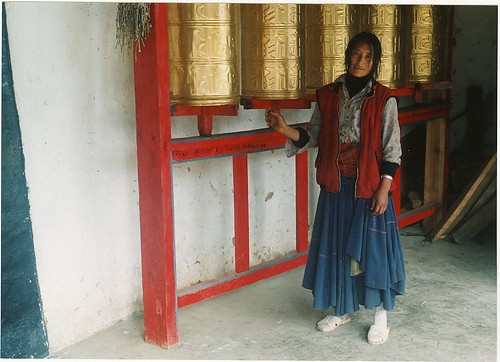
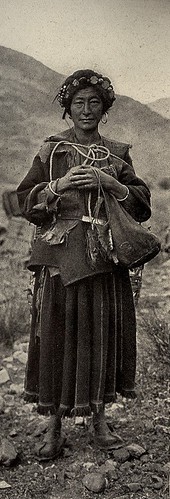
Monk and helper, Renjom gompa
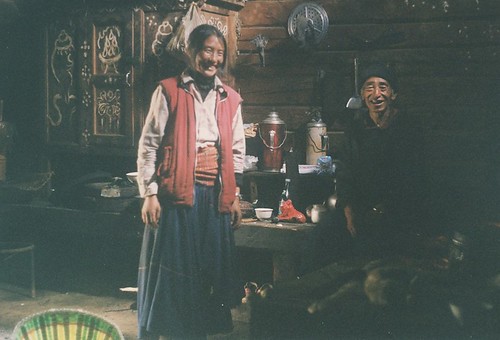
These very nice people entertained me for afternoon tea during my brief visit. Wish I could have stayed there instead of Wujiao, but I'd left my bags back at the village.
Renjom gompa, near Wujiao [屋脚]
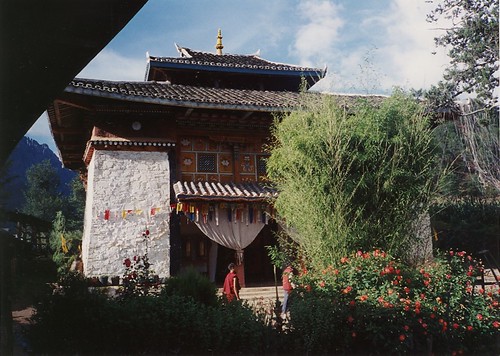
This is the small Buddhist monastery where Jospeh Rock stayed on his way to Muli. Now, as then, there is just one monk in residence.

Wednesday, February 23, 2005
The view from Renjom gompa
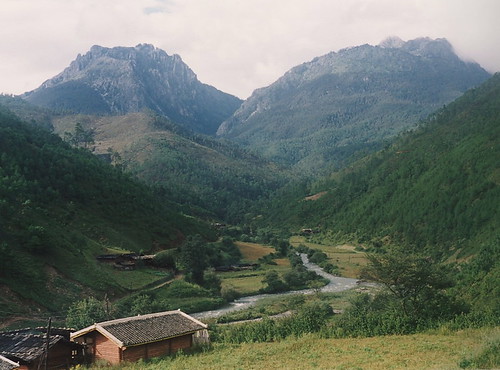
This is the view from the monastery towards the mountain pass between Yongning and Muli. The old track passes through the cleft between those twompeaks. The new jeep track skirts round the left.
屋脚 [Wujiao]: The gorge to Renjom gompa
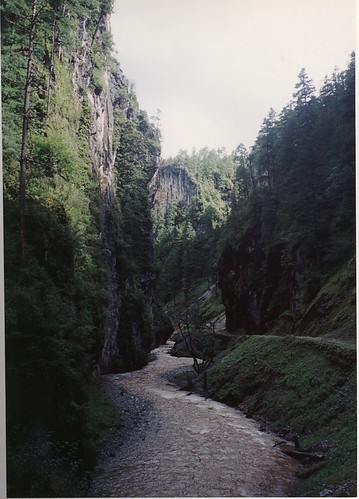
Down from Wujiao [屋脚] is a track that passes through a 1km gorge and leads to the small moanstery of Renjom Gompa.
The view towards Muli
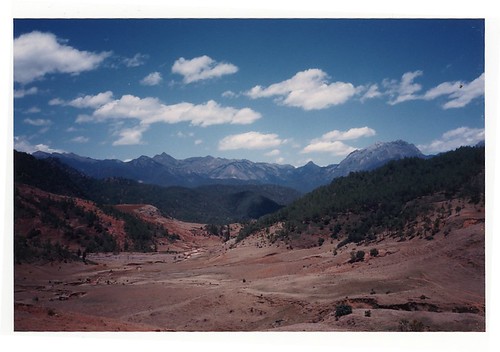
This was taken from the top of one of the many low ridges of hills between Yongning and Wujiao. The track to Muli crosses those distant mountains.This pic was taken in the spring of 1994, hence the barren and dry landscape - in contrast to the green landscape seen in the summer [wet ] season.

Joseph Rock near Lijiasun [利加嘴] in 1924
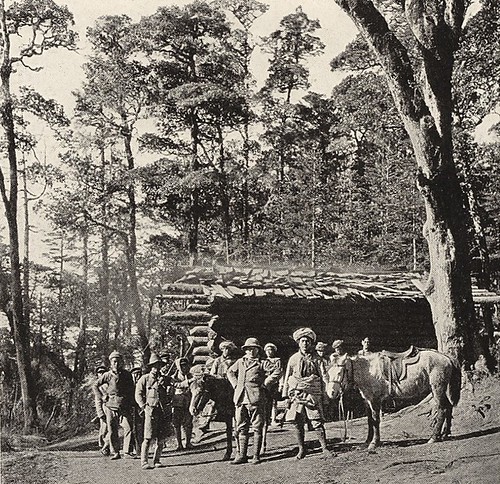
Rock passed through this village in 1924 on his way from Lijiang to Muli.
Hay drying rack, Lijiasun [利加嘴]
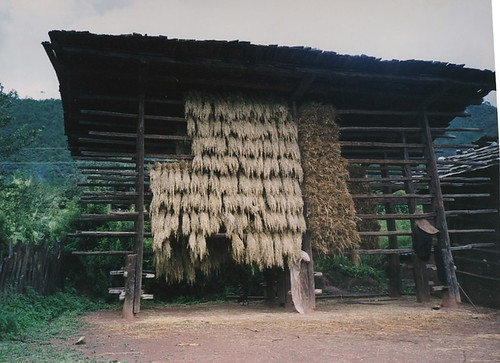
Seen in Lijiasun in the summer of 2003.
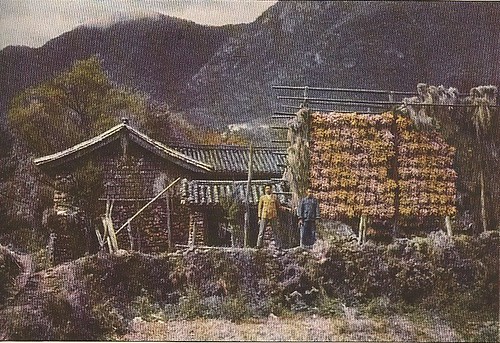
Here is a similar hay drying rack seen by Joseph Rock nearby. "Pine log racks are a feature of most farms in this district. They are used for drying corn and wheat in the open."
Lijiasun [利加嘴]
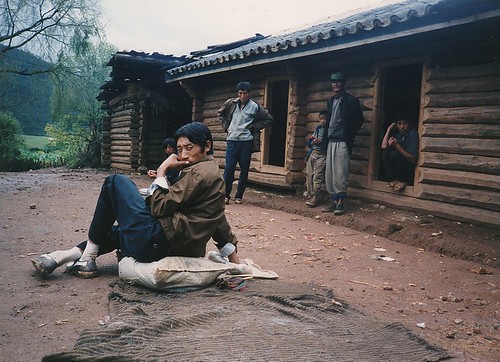
This fly-ridden village was an uneasy stopover on the way to Muli. The local people were Yi, Naxi and Mongol, but didn't seem very happy to have me passing through.

A swastika used for its original Buddhist meaning.
Muli: the Wujiao road
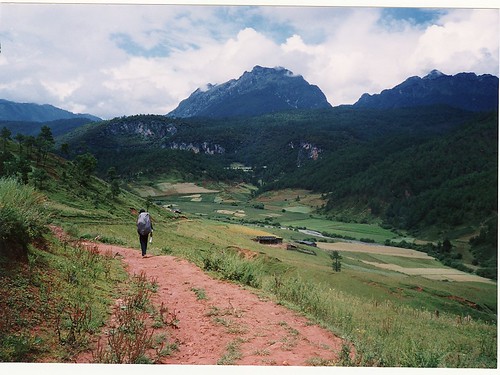
This is the track you follow from Yongning to Muli. On the first day it goes via a Mongol village of Lijiasun, to Wujiao. It's an almost medieval lifestyle around here - no electricity, very rural, everything done by hand.
Hot springs at Yongning (Wenquan) 温泉, 泸沽湖
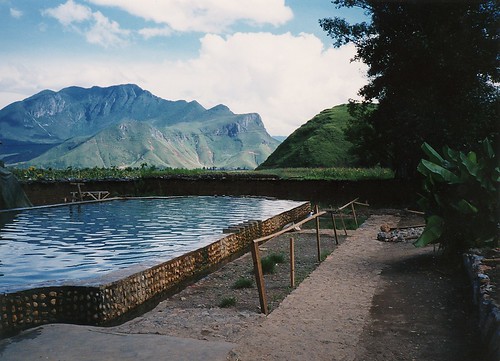
Leaving Yongning for Muli, it is a two-three walk to the hot springs [wenquan] on the eastern edge of town. There is now a "resort" here where pools have been built for tourists. There will probably be other pools built by the time you read this.
The pools are near the village of Wulabi, and it is here where you leave the road and head out across the low hills towards Lijiasun and Wujiao - the first night's stop on the way to Muli.
Saturday, February 19, 2005
Yongning priest, 1928
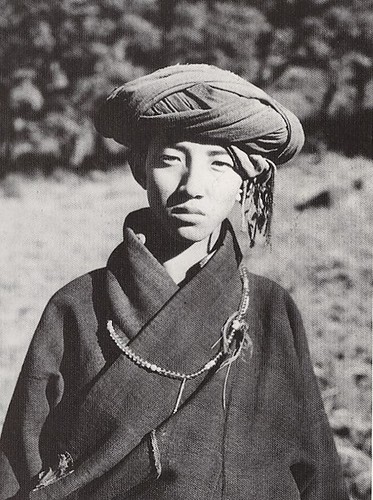
A young Bonpo priest from Zuosuo, near Yongning, where the Bonpo school predominates - Joseph Rock.
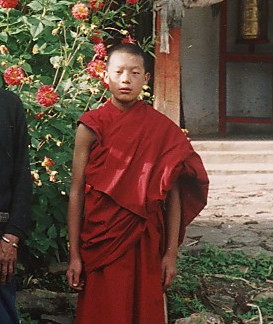
In the Yongning hills
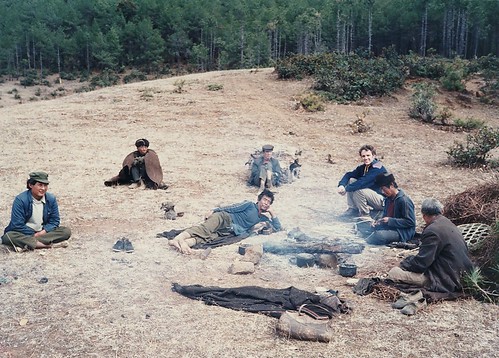
Not quite the ceremony seen below - this is the nearest I can get to showing people on the Yongning plain. It's some local Pumi having a brew in the hills just above Yongning.
Dispelling the tummy troubling demon: Naxi priests (domba) of Yongning
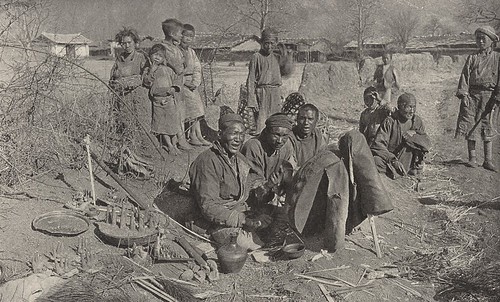
According to Rock these are "a group of Lushi Tombas, or witch priests, seated on the Youngning plain".
These domba "are engaged solely for the purpose of dealing with and driving out eveil spirits which cause bad luck, illness."
These ones have various drums, bowls full of dough gods, and they are performing their rites in front of an altar of pine sticks and oak branches, with perforated poaper smeared in pig's blood.
"They were concerned with driving out of a devel who had caused a stomach ache in a village headman," according to Rock.
The old man of Yongning
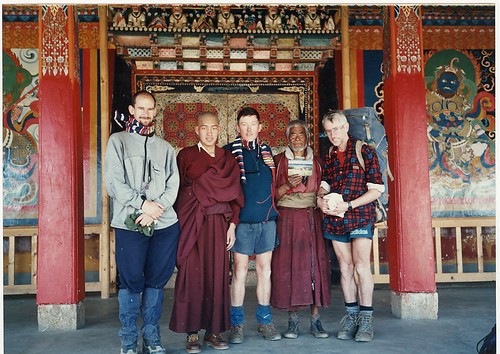
When we visited Yongning monastery in 1996 on our way to Muli we met Lu Zo who was by then an old man in his seventies.
Lu Zo is still the head lama at Yongning.
He is second from right in this picture, accompanied by a younger monk from the rebuilt monastery [and a couple of my kiwi companions]. See further down this blog for how the monastery itself looks now and 70 years ago.
An oracle seen at Yongning, 1928
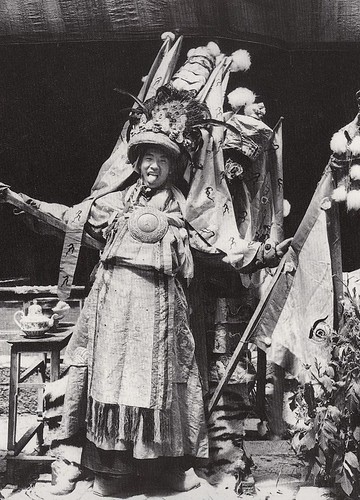
The oracle (sungma) of Yongning - at the moment of possession he shakes, trembles, rolls his eyes, barks and sticks out his tongue. The metal mirror onhis chest reveals the image of the approaching spirit, Dorje Drakte.
[Joseph Rock]
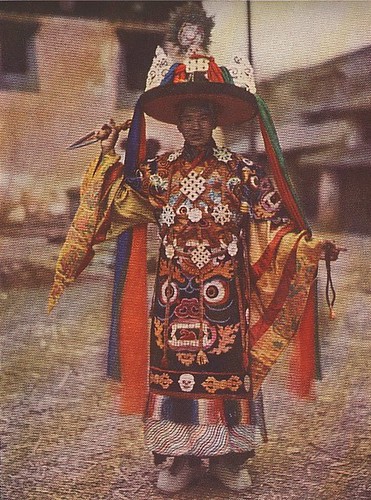
"He commemorates a deed of violence": Sorcerers dance with spirit daggers in hand to celebrate the assassination of an ancient royal persecutor of Buddhism. Youngning.
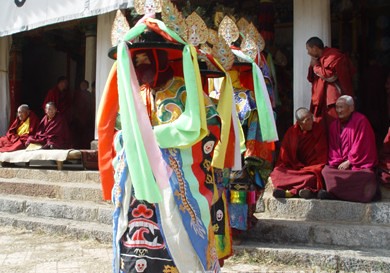
The same sorcerers costumes are still paraded today. But are they the real thing?
Subscribe to:
Posts (Atom)


