[This is a great tribute to the inimitable Xuan Ke, a Naxi cultural ambassador in Lijiang who championed traditional Naxi culture and led the revived Naxi orchestra. Written by Professor Wang Qingling, School of Foreign Languages, Yunnan Normal University. Kunming. It was originally published in Naren Wenyuan in 2023.]
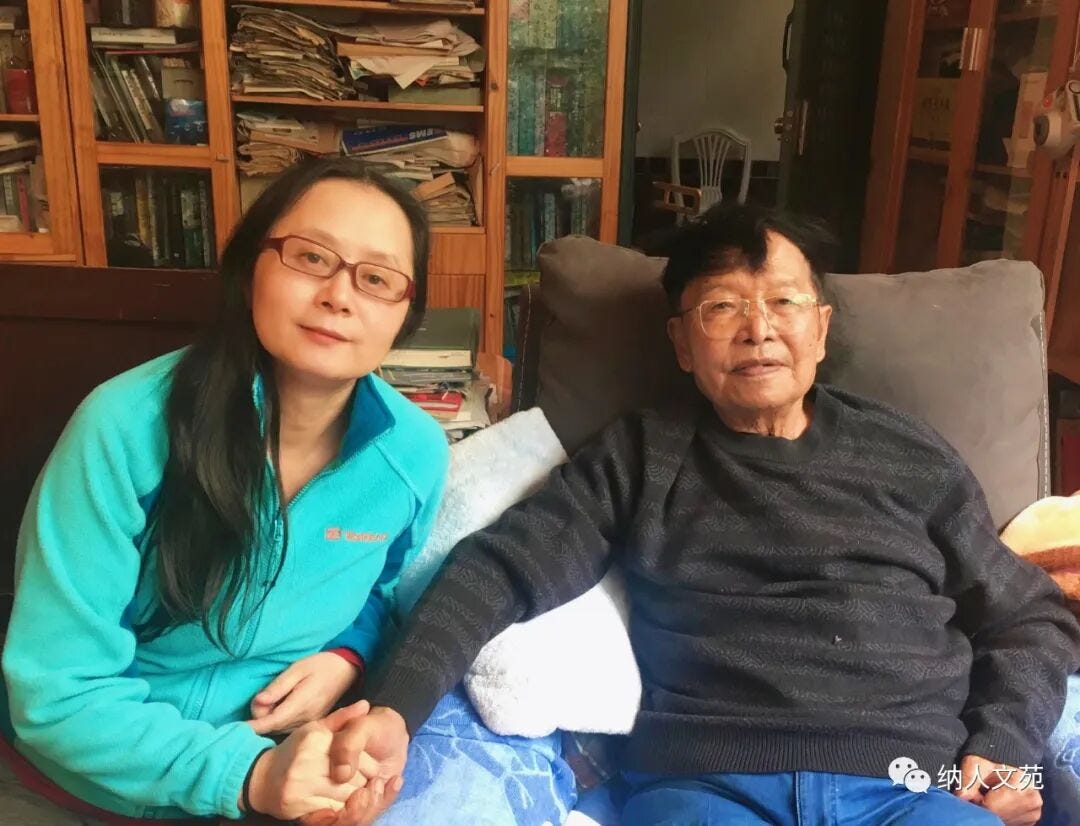
In September 1979, I graduated from the Central Primary School in Dayan Town, Lijiang, and entered the first year of junior high school at Lijiang Regional Middle School. Our classroom was one of the school’s famous eight large classrooms. I remember one day, I saw a group of students surrounding a middle-aged man at the classroom door, so I quickly ran over. The man said, “My name is Xuan Ke, and I’m your English teacher. This is my first class at Lijiang No. 1 Middle School...” This was also the first English class for all of us in the class. In those days, in remote Lijiang, children started learning English from the 26 letters of the alphabet in the first year of junior high.
Mr. Xuan also paid special attention to our English handwriting; he had beautiful, flowing English handwriting. He would also tell us stories about himself, his family, Lijiang, music, painting, and many other things that seemed unrelated to English lessons. This made many people think that Mr. Xuan was neglecting his duties, but we listened with great interest, looking forward to English classes, and enjoying Mr. Xuan’s humorous and engaging teaching style.
At that time, Mr. Xuan even specially selected a few students to have extra classes on Sunday mornings in the attic on the third floor of his house, and I was fortunate enough to be chosen. There, I heard in detail the story of Locke, as well as Locke’s book “The Ancient Naxi Kingdom of Southwest China,” and also learned about Peter Gould. In the attic, he could speak freely about music, about the stories of the Naxi and Tibetan people, and about the Naxi ancient music he was compiling… Teacher Xuan also taught music appreciation classes.
In the only large classroom in the Lijiang area’s middle school at the time, he lectured students from all grades on European music, on Beethoven, Mozart… He would occasionally interject with jokes. The classroom was packed, students attentively listening to the music he played, captivated by his imaginative interpretations, and listening intently to the legendary stories of these musicians… His lectures in the late 1970s and early 1980s greatly broadened our horizons and enriched our understanding.
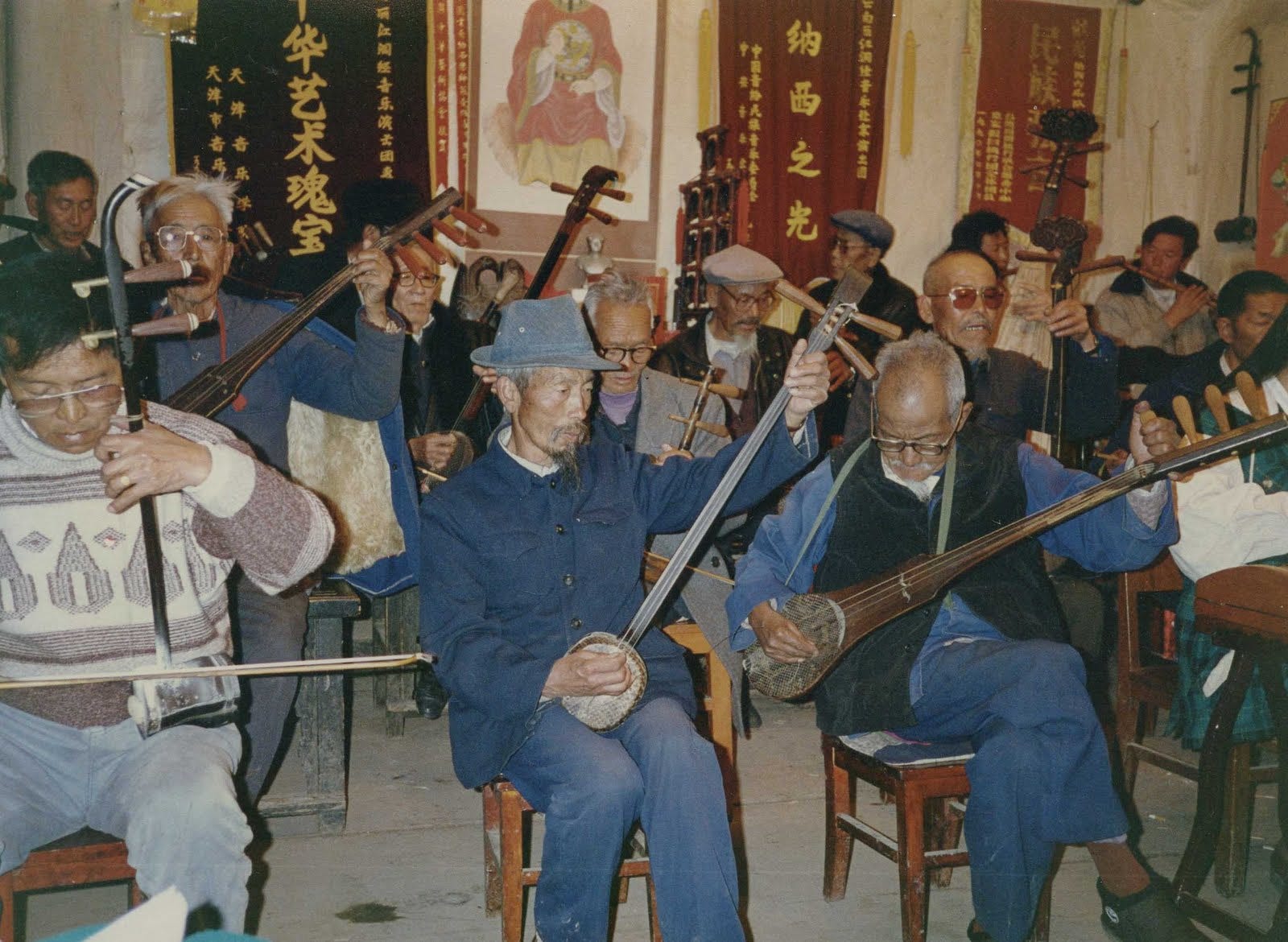
Later, when I was studying English at East China Normal University, I returned to Lijiang during a holiday to visit Teacher Xuan. He was holding a baby just a few months old and told me this was his daughter. I was a little incredulous, thinking he was joking. At that time, Teacher Xuan’s son, Xuan Liujin, was already around 10 years old, and Teacher Xuan was nearly 60.
I remember that day in his courtyard, he told me he was conducting a teaching experiment at Huangshan Middle School, teaching English in Naxi. He said that for Naxi students, learning English in Naxi was more direct and convenient. Because the word order of English is very similar to that of Naxi, it’s easier to understand English sentence structures in Naxi. He also said that teaching English in Chinese requires students to go through a triangle of language—from Chinese to Naxi and then back to English—making it more difficult for them; teaching English in Naxi, however, is a straight line, directly from Naxi to English and then back to Naxi.
Later, when I visited him after graduating from university, he told me he had published a paper in the *Journal of Tianjin Conservatory of Music*, proposing a theory that music originated from human fear… Professor Xuan was always forward-thinking and had a strong drive to act.
In that isolated era, in Lijiang, which was still quite isolated at the time, Teacher Xuan told us about the outside world, filling us, as young children, with longing for it. In the mid-to-late 1980s and early 1990s, when everyone thought things from the outside world and foreign culture were superior, he tirelessly promoted Lijiang culture and Naxi ancient music. His contributions to the promotion of Lijiang tourism and Naxi culture are undeniable!
I remember when I first started working, around the Spring Festival of 1990, I took a foreign teacher from my school to Lijiang to listen to Teacher Xuan and his Naxi ancient music performance. At that time, only foreigners attended, just a few scattered listeners. The foreign teacher was very excited, specifically visiting Teacher Xuan and buying many cassette tapes, saying he wanted to give them away. At the time, I thought, “This stuff makes me sleepy, and he wants to give it away!”
Later, Teacher Xuan became famous, and my contact with him decreased. Later still, he asked me to help translate some things, and we started contacting each other more often. Back then, whenever he came to Kunming, he would stay at the Kunming New Era Hotel. He often asked me to accompany him for meals, and the dishes he always ordered were stir-fried pickled vegetables with meat and stir-fried potato shreds. People constantly came to visit him at the hotel, and he enjoyed being surrounded by people, but he didn’t like dining with those who came specifically to see him.
During the years when Professor Xuan was surrounded by admirers, I sometimes visited him at Xuan Ke Manor. He could only squeeze in a few moments to talk to me amidst the constant stream of visitors, but I could clearly feel that his visits were genuine. Sometimes, he would ask me to tally up the amounts he had donated, and he would boast about how he maintained his usual humor in front of important figures.
Sometimes, he would tell me about his family, his worries, his troubles... Later, visitors to Xuanke Manor became increasingly rare, and Professor Xuan longed for our visits even more. I gradually sensed his aging, his loneliness, his helplessness... But he was still the eternally youthful, eternally passionate, and never-say-die Xuanke...


